Videos
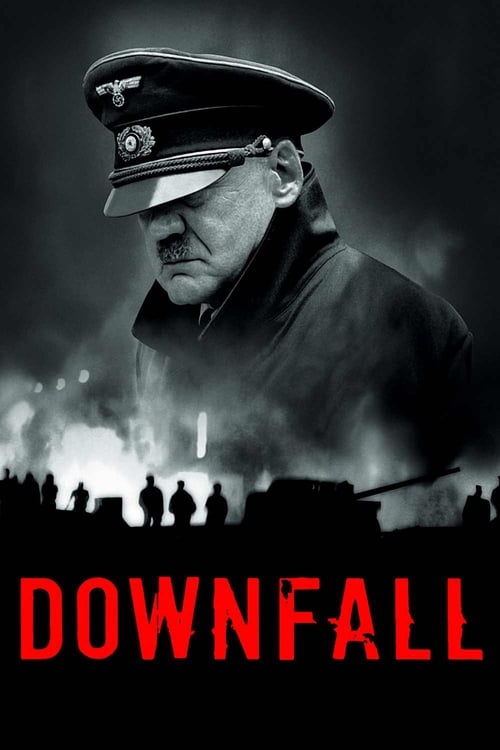
Downfall
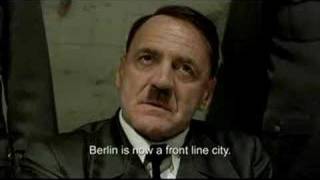
In April of 1945, Germany stands at the brink of defeat with the Russian Army closing in from the east and the Allied Expeditionary Force attacking from the west. In Berlin, capital of the Third Reich, Adolf Hitler proclaims that Germany will still achieve victory and orders his generals and advisers to fight to the last man. When the end finally does come, and Hitler lies dead by his own hand, what is left of his military must find a way to end the killing that is the Battle of Berlin, and lay down their arms in surrender.

7.9

155 min
Release
2004-09-16
Cast

Bruno Ganz
as Adolf Hitler
Alexandra Maria Lara
as Traudl Junge
Corinna Harfouch
as Magda Goebbels
Ulrich Matthes
as Joseph Goebbels
Juliane Köhler
as Eva Braun
Heino Ferch
as Albert Speer
Christian Berkel
as Prof. Dr. Ernst-Günter Schenck
Thomas Kretschmann
as SS-Gruppenführer Hermann Fegelein
Ulrich Noethen
as Reichsführer SS Heinrich Himmler
Birgit Minichmayr
as Gerda Christian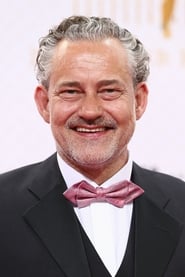
Rolf Kanies
as General der Infanterie Hans Krebs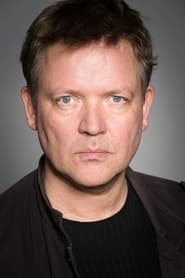
Justus von Dohnányi
as General der Infanterie Wilhelm Burgdorf
Michael Mendl
as General der Artillerie Helmuth Weidling
André Hennicke
as SS-Brigadeführer Wilhelm Mohnke
Christian Redl
as Generaloberst Alfred Jodl
Götz Otto
as SS-Hauptsturmführer Otto Günsche
Thomas Limpinsel
as Kammerdiener Heinz Linge
Thomas Thieme
as Martin Bormann
Donevan Gunia
as Peter Kranz
Matthias Habich
as Prof. Dr. Werner Haase
Alexander Held
as Walter Hewel
Devid Striesow
as Feldwebel Tornow
Dieter Mann
as Feldmarschall Wilhelm Keitel
Bettina Redlich
as Frl. Constanze Manziarly
Heinrich Schmieder
as Rochus Misch
Anna Thalbach
as Hanna Reitsch
Dietrich Hollinderbäumer
as Ritter Robert von Greim
Ulrike Krumbiegel
as Dorothee Kranz
Karl Kranzkowski
as Wilhelm Kranz
Thorsten Krohn
as Dr. Stumpfegger
Jürgen Tonkel
as Erich Kempka
Fabian Busch
as Obersturmbannführer Stehr
Christian Hoening
as Reichsarzt SS Grawitz
Dirk Borchardt
as Panzerkommandant
Elizaveta Boyarskaya
as Schwester Erna
Michael Brandner
as H. FritzcheIgor Bubenchikov
as Schadle
Martin Butzke
as SS-Soldat 1
Dmitriy Bykovskiy-Romashov
as Soldat 2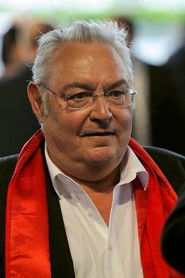
Mathias Gnädinger
as Hermann GöringBohdan Graczyk
as Oberst Clausen
Norbert Heckner
as Standesbeamter WagnerEnno Hesse
as Oberleutnant
Julia Jentsch
as Hanna Potrowski
Michael Kind
as SA-Mann / RuinenkellerElisabeth von Koch
as Margarete Lorenz
Konstantin Lukashov
as Älterer Soldat
Stefan Mehren
as Verwundeter Soldat
Katerina Poladjan
as Russische Arzthelferin
Tanja Schleiff
as Russische ÄrztinChristian Schmidt
as SS-Mann Greifkommando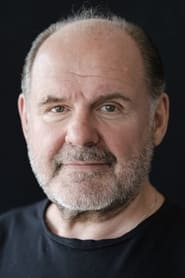
August Schmölzer
as BaurJurij Schrader
as Dolmetscher
Mariya Semyonova
as Rothaarige Frau
Klaus-Jürgen Steinmann
as Offizier 1
Veit Stübner
as Obergruppenführer Tellermann
Oliver Stritzel
as Maschinist Hentschel
Vsevolod Tsurilo
as Russischer Adjutant
Henning Peker
as Wachsoldat vor der Wolfsschanze (uncredited)Dieter Rupp
as Mohnke's Adjutant im Bunker (uncredited)
Andrey Blagoslovenskiy
as Soldat im Ruinenkeller
Valeriy Salomakhin
as Staryy Tsivilist
Igor Sergeev
as Russischer Soldat
Traudl Junge
as Self (archive footage)Director

REVIEWS

Wuchak
**_Hitler’s end_** As the Red Army encroaches upon Berlin in late April, 1945, the final days of Hitler in his bunker (Bruno Ganz) are told from the perspective of his secretary, Traudl Junge (Alexandra Maria Lara). "Downfall” (2004) is not a conventional war movie due to its downbeat subject and is more educational than entertaining, but it’s a necessary piece of the puzzle in understanding WW2. If you appreciate movies like "Enemy at the Gates" (2001), "The Pianist" (2002), "Black Book" (2006), "Valkyrie" (2008), "Rommel" (2012), "Warsaw '44" (2014) and "Fury" (2014), you’ll appreciate this one too. It's hard to rate a flick like this because it’s not an enjoyable experience, but it works superbly as means to go back in history and view Hitler’s final days. The film runs 2 hours, 36 minutes, and was shot in Germany (Berlin, Munich and Bavaria Studios) and Russia (St. Petersburg). GRADE: B
Geronimo1967
Though he might not much like the compliment, Bruno Ganz is superb as the Führer in this dramatisation of his last few days in Berlin. If you saw George Schaefer’s attempt at this, with Anthony Hopkins in the title role (1981) then you’ll already have the gist of what occurs, but this has an altogether less dramatic, more natural, feel to it. It helps, of course, that those of us watching know now just how precarious his situation was, but for him surrounded as he was by yes men, Ganz portrays a man who genuinely believes the war is there to win. None of his acolytes have the courage to tell him he is defeated, and those who do appreciate it are all too often working on plans to save their own skins. The assembled supporting cast here, including many of those playing the wives like Corinna Harfouch (Goebbels) and Juliane Köhler (Braun) as well as that of secretary Trudi (Alexandra Maria Lara) help to keep this chronology remarkably human. This is a personification of their situation and though we know that evil lived here, this illustrates more a man who is sick. Physically and psychologically sick. That’s not to suggest it makes apologies for the man, but oddly enough it makes him a little more comprehensible amidst histories that unequivocally vilify the man. This isn’t so much about Naziism, or the politics of hate and bigotry - we join the timeframe too late for those to be relevant, it’s more about a realisation of failure, it’s ensuing panic and even the surprising degree of loyalty from those (usually) lower ranks who really were his true disciples. On that last point, Oliver Hirschbiegel also powerfully illustrates the power of indoctrination with children not yet in their teens enthusiastically manning the city’s defences whilst still proudly sporting their swastikas. Clearly just a little thought might have encouraged their officers to let them get back to what remained of their homes and families instead of facing the oncoming Soviet troops. It’s the cumulation of the threads as we build to quite a delicately paced denouement that gives this a considerable degree of plausibility. The production design and visual effects as the city collapses mirror nicely the mental collapses going on under the ground, and though we won’t often have seen a film that attempts this kind of level of objectivity about these events, this is certainly a poignant way to see a destructive man destroy himself.
SIMILAR MOVIES

My Man

Bismarck
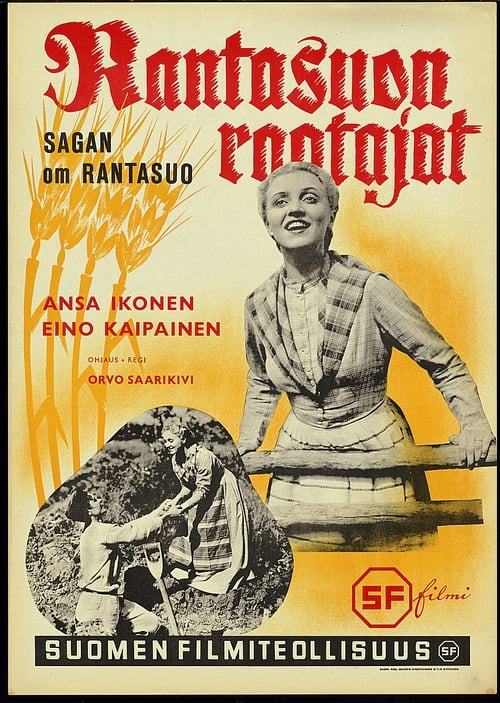
Rantasuon raatajat
Yrjänän emännän synti
Seven Years in Tibet
The Mortal Storm
The Hustler

The Man Who Fell to Earth
Straw Dogs

Heavenly Creatures
The Inheritors
Sommersby

The Remains of the Day

Hollywoodland
The Prestige
Lawrence of Arabia
The Street
The Eichmann Trial
Ghosts

The Wind That Shakes the Barley